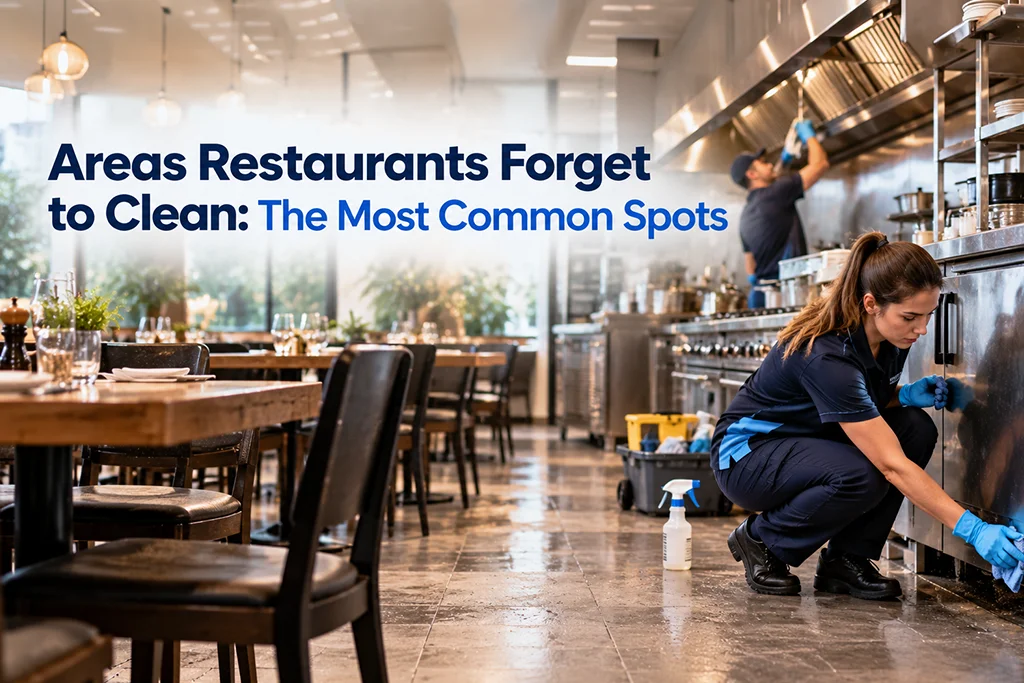
Restaurant cleaning checklists from industry sources flag the same areas restaurants forget to clean: under and behind equipment, behind coolers, appliance tops, ceilings and light fixtures, ice machines, beverage nozzles, glass mats and mop sinks. In BC, several of these count as equipment under the Food Premises Regulation, and operators must keep equipment sanitary.
At Wizard Cleaning, we understand that these less visible areas can be easy to miss during a busy service. Our restaurant cleaning services in Victoria, Sidney and Langford can help businesses keep up with the deeper cleaning tasks that may be difficult to fit into a regular closing routine.
What Areas Do Restaurants Forget To Clean?
Grease and crumbs build up under fryers and ovens and can attract pests. Behind coolers and freezers, dust, grime and condensation collect and can encourage mould. Appliance tops gather grease that can add to fire risk. Airborne grease settles on ceilings and light fixtures, and at the bar, glass mats can turn sticky and grow mould.
Behind The Line: Under Equipment, Behind Coolers And Up The Walls
Grease and crumbs can collect under fryers and ovens, so consider giving this area a named night on the cleaning schedule.
While you’re behind the coolers, check the top of the fridge. Appliance tops collect dust, food debris and grease, which can attract pests and add to fire risk.
Grease travels up, too, settling with dust on ceilings, light fixtures and ceiling fans. Island Health’s sanitation plan template gives walls and ceilings, under and behind equipment, and the grill and fume hood their own lines on its cleaning schedule.
Some of these areas can be added to your regular cleaning routine, while others may need professional help. Wizard Cleaning provides restaurant cleaning services in Victoria, Sidney, and Langford for businesses that need help keeping up with the deeper and recurring cleaning tasks.
The Bar, The Bins And The Mop Sink
Beverage nozzles can collect residue, and a dirty nozzle can affect what is poured. Bar glass mats can get sticky and grow mould, so give them a line on the schedule too.
Garbage cans also get a line on Island Health’s template. Operators must keep premises free of pests and of conditions that let pests harbour or breed.
Mop sinks can become a dumping ground, and one restaurant supplier suggests a weekly soap and hot-water spray-out to reduce mould risk. Check the chemical shelf beside it: cleaning chemicals must be kept away from food, in a separate room or cabinet, in clearly labelled non-food containers.
Who Can Handle Each Cleaning Task
Some areas can be managed by kitchen or bar staff as part of a regular cleaning routine. Others may need professional cleaning because they are difficult to reach or require specialised equipment.
| Area | Why It Gets Missed | Who Can Handle It |
| Under fryers and ovens | Out of sight | Kitchen staff, on a named night |
| Behind coolers, tops of appliances | Behind or above eye level | Kitchen staff |
| Cookline walls, floors and drains | Grease needs degreasing, not a wipe | Outside cleaning crew |
| Ceilings and light fixtures | Up high | Outside cleaning crew |
| Ice machine, nozzles, glass mats | Busy during service | Bar and kitchen staff |
| Garbage cans and mop sink | Away from the line | Kitchen staff |
| Exhaust ducts and fan | Past the hood | Hood cleaning contractor |
A clear cleaning schedule helps make sure these areas are not left until they become a problem. Assign routine tasks to staff and bring in the right professional when a job requires deeper cleaning or specialised equipment.
Does Island Health Require A Sanitation Plan?
Yes. Island Health says food safety plans and sanitation plans are required for food service establishments and food processors. Its currently linked sanitation plan guide says a plan must be completed and approved before a permit or approval is issued. The template suggests recording what gets cleaned, who cleans it, when, how, and how completion is checked.
Its Environmental Health Officers carry out more than 7,000 inspections of restaurants, food facilities and stores each year. Island Health states that an officer has discretion to order a facility closed if it exceeds the maximum acceptable risk for continued operation or the operator fails to correct or eliminate identified hazards.
For your own kitchen, confirm current requirements with your local Island Health environmental public health office.
When Is It Time to Bring In Professional Cleaning Services?
When the list is longer than your closing crew can finish, part of it can go to an outside team. The regulation places the sanitation requirement on the operator, including the duty to maintain the premises and equipment in a sanitary condition.
At Wizard Cleaning, we offer restaurant cleaning in Victoria, Sidney and Langford, early mornings before prep, late nights after close, or between lunch and dinner service. You can flag an area your last inspection noted when you book, and it becomes a priority.
After-hours visits end with detailed notes, and we’re also upfront that a clean can’t guarantee a passing inspection.
A practical next step is to walk the kitchen after closing with your sanitation plan, check each area in the table above, and add a name and a night beside anything missing. For a free, no-obligation quote, we just ask for the size of your kitchen and dining size, your current routine, and whether you want a one-time deep clean or a weekly or biweekly schedule.